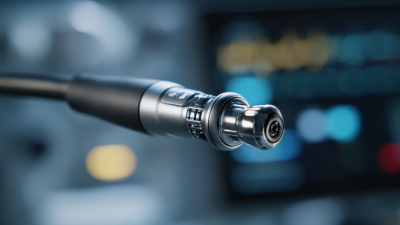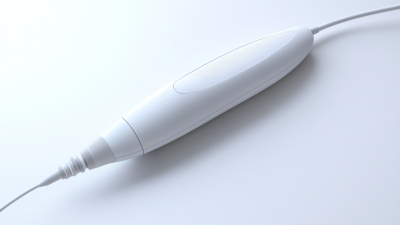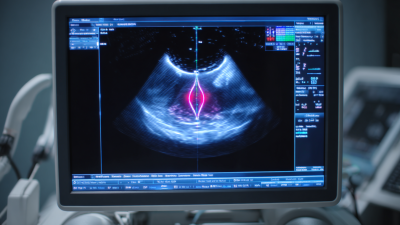
When it comes to medical imaging, the Ultrasound Transducer Probe really stands out as a key tool for capturing important details about the body's structures and functions. Basically, it’s a pretty advanced device that turns electrical signals into sound waves—ultrasound—that go into the body, bounce off tissues, and come back to create those detailed imaGEs doctors rely on. Over the years, this technology has come a long way, making it easier and more accurate for us to diagnose and keep an eye on different health conditions.
At Guangzhou Rongtao Medical Tech LTD, we truly understand just how vital the Ultrasound Transducer Probe is in everyday clinical work. We’ve been dedicated to providing top-notch after-sales support for over a decade, especially in ultrasound tech. This experience has given us a real inside look at the ins and outs of these devices. We’re always pushing for improvements and new solutions to tackle technical issues and help extend the life of ultrasound equipment. By making sure Ultrasound Transducer Probes are reliable and effective, we give healthcare pros the tools they need to deliver better patient care and achieve more accurate diagnoses.

An ultrasound transducer probe is a crucial component in medical imaging, primarily used in ultrasound examinations. This device converts electrical energy into ultrasound waves and vice versa. When the probe emits high-frequency sound waves, they travel through the body and reflect off various tissues, generating echoes that are captured back by the transducer. These echoes are then converted into electrical signals, which are processed to create detailed images of internal structures. According to a recent report by MarketsandMarkets, the global ultrasound transducer market is projected to reach USD 5.3 billion by 2025, driven by the increased demand for non-invasive diagnostic procedures.
Ultrasound transducer probes come in several types, including linear, convex, and phased array probes, each suited for different diagnostic purposes. For example, linear probes are typically used for vascular imaging, while convex probes are preferred for abdominal examinations due to their wider field of view. As outlined by the American Institute of Ultrasound in Medicine, the advancements in transducer technology have significantly improved the resolution and quality of ultrasound images, allowing for more accurate diagnoses and better patient outcomes. The ongoing innovations in transducer design and materials—such as the development of semiconductor-based probes—are expected to further enhance the functionality and precision of ultrasound imaging in the future.
Ultrasound transducer probes are essential devices used in medical imaging, leveraging the principles of acoustic wave generation to create detailed images of internal structures. At the core of this technology is the piezoelectric effect, where certain materials generate electrical signals when subjected to mechanical stress. According to the FDA, ultrasound is a widely used diagnostic tool, with over 25 million procedures performed annually in the United States alone.
The physics behind ultrasound wave generation involves converting electrical energy into sound waves through the transducer. The probe emits high-frequency sound waves, typically ranging from 2 to 18 MHz, which travel through tissues and reflect back to the transducer. These returning echoes are then transformed back into electrical signals, which are processed to create visual images. Research indicates that higher frequencies provide better resolution but have lower penetration depth, making it critical to choose the appropriate frequency based on the imaging requirements.
**Tips:** When selecting an ultrasound transducer probe, consider the specific imaging needs—such as depth of penetration and resolution. It's also advisable to stay updated on the latest developments in transducer technology, as innovations continue to enhance image quality and diagnostic capabilities. Regular maintenance of your ultrasound equipment is crucial for ensuring optimal performance and accuracy in diagnostics.
Ultrasound transducer probes are critical components in medical imaging, and they come in various types designed for specific diagnostic purposes. One of the most common types is the linear array transducer, which emits ultrasound waves in a straight line to create high-resolution images of superficial structures, making it ideal for vascular studies and musculoskeletal imaging. According to a report by MarketsandMarkets, the demand for linear array transducer probes has been steadily increasing, projected to grow at a CAGR of 6.2% from 2020 to 2025, owing to their precision and effectiveness in detecting conditions like blood clots and soft tissue injuries.
Another significant type is the convex array transducer, which provides a wider field of view and is particularly suited for abdominal imaging. This probe emits waves in a curved pattern, allowing for deeper penetration into the body while still capturing detailed images of internal organs. The global market for convex transducer probes is anticipated to reach USD 1.23 billion by 2026, as reported by Grand View Research, highlighting their essential role in diagnosing conditions related to the liver, kidneys, and other abdominal organs. Each type of transducer plays a unique role in enhancing diagnostic accuracy and improving patient outcomes in ultrasound imaging.
An ultrasound transducer probe is a vital component in medical imaging, transforming electrical energy into sound waves and vice versa.
Three key specifications crucial to its functionality are frequency, sensitivity, and resolution.
The frequency of an ultrasound probe, typically measured in megahertz (MHz), influences the depth and clarity of imaging. Higher frequencies provide better resolution for superficial structures, while lower frequencies penetrate deeper tissues but offer reduced detail. For example, a probe operating at 5 MHz is ideal for abdominal imaging, while a 12 MHz probe is often used for superficial structures like the thyroid or breast tissues.
Sensitivity refers to the transducer's ability to detect weak echoes. It's crucial for identifying subtle changes in tissue structures, particularly in early-stage disease diagnosis. A high-sensitivity transducer, as reported in the "Journal of Diagnostic Medical Sonography", can enhance disease detection rates by up to 30%.
Lastly, resolution, which is the ability to distinguish between two closely spaced structures, is paramount in clinical diagnostics. Modern ultrasound systems achieve spatial resolutions of around 1 to 2 mm, allowing for detailed visualization of complex anatomical features.
These specifications collectively define the effectiveness of ultrasound transducer probes, underscoring their essential role in diagnostic imaging.
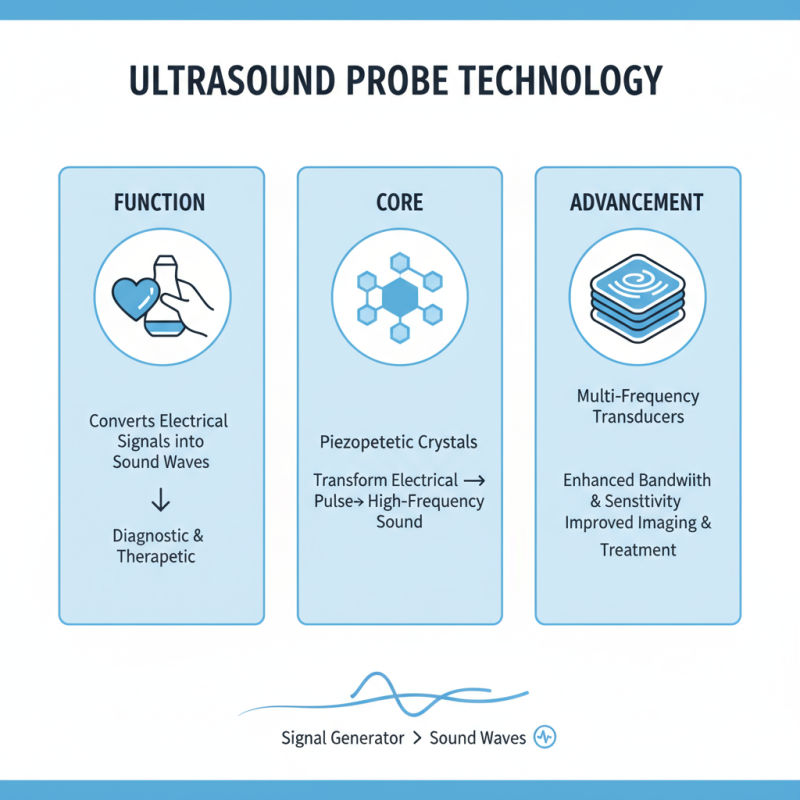
Ultrasound probes play a vital role in converting electrical signals into sound waves, which are integral to both diagnostic and therapeutic applications in medicine. The core of these probes consists of piezoelectric crystals that are capable of converting electrical impulses into high-frequency sound waves. This is evident in the way ultrasonography systems operate, where a signal generator interfaces with a transducer to produce the necessary sound waves for imaging. A recent study highlights the advancement in ultrasound technology, revealing that the design of transducers is evolving to include multi-frequency capabilities, enhancing both bandwidth and sensitivity, which are crucial for accurate imaging and treatment.
The emerging field of focused ultrasound is particularly promising, as it utilizes concentrated sound waves not only for imaging but also for non-invasive treatments of conditions such as cancer and Alzheimer’s disease. With advancements in ultrasound technology, it has been reported that focused ultrasound can ablate tumors while sparing surrounding healthy tissue, offering a new horizon in surgical interventions. According to industry reports, the global ultrasound market is anticipated to surpass $10 billion by 2025, driven by these innovative applications. The integration of wearable and portable acoustic sensing technologies is further set to revolutionize patient diagnostics and treatment approaches, demonstrating the expanding potential of ultrasound in modern medicine.
Ultrasound transducer probes are essential tools in healthcare, used extensively for diagnostic imaging and therapeutic procedures. These devices convert electrical energy into sound waves, which penetrate the body and echo back, forming images of internal structures. Their clinical applications span various medical fields, including obstetrics, cardiology, and musculoskeletal imaging. In obstetrics, for instance, transducer probes allow for the monitoring of fetal development, enabling healthcare providers to assess the health and position of the fetus throughout pregnancy.
In cardiology, ultrasound transducer probes are crucial for echocardiograms, allowing clinicians to visualize heart function and detect abnormalities. They aid in evaluating the heart’s size, shape, and movement of blood flow, which is vital for diagnosing conditions like heart disease. Furthermore, in musculoskeletal medicine, ultrasound imaging helps in guiding injections, diagnosing injuries, and monitoring conditions such as tendonitis or ligament tears. The versatility of ultrasound transducer probes enhances their value in clinical settings, making them indispensable for non-invasive diagnostics and real-time monitoring of various health conditions.
The ultrasound technology landscape is rapidly evolving, with significant advancements in probe design and imaging capabilities. Recent reports indicate that the global ultrasound market is projected to reach approximately $9.8 billion by 2026, driven by innovations in transducer manufacturing and signal processing. These advancements enhance image quality and enable more precise diagnostics, leading to improved patient outcomes.
One notable trend is the integration of artificial intelligence (AI) in ultrasound imaging. AI algorithms can analyze ultrasound images in real-time, reducing interpretation time and enhancing accuracy. For example, a study published in the Journal of Ultrasound in Medicine found that AI-assisted ultrasound improved diagnostic accuracy by over 15% in some applications. Additionally, portable ultrasound devices are becoming more prevalent, making the technology accessible in remote locations and improving the speed of emergency care.
Tips: When selecting an ultrasound probe, consider the frequency range and application compatibility to ensure optimal imaging results. Regular maintenance and calibration of ultrasound equipment are crucial for sustaining performance and accuracy. Lastly, staying updated on emerging technologies can offer opportunities for enhancing clinical practices and improving diagnostic capabilities.
The reliability of ultrasound systems is critical for ensuring consistent diagnostic capabilities, and industry reports highlight the importance of power boards in this respect. The power board 5201018-2, specifically designed for the GE Logiq E9, serves as an example of a component that can enhance operational stability. This part has been engineered to meet rigorous performance standards, which plays a significant role in the overall efficiency and reliability of the ultrasound system.
An additional compatible system is the GE Logiq E92, further demonstrating the versatility of the power board 5201018-2. Users can expect a robust warranty of 60 days, which not only underscores the manufacturer's confidence in the part's quality but also provides reassurance to customers regarding their investment. In a demanding healthcare environment where equipment downtime can hinder patient care, having a dependable power board is essential for maintaining the smooth functionality of ultrasound machines. By improving both reliability and performance, the power board 5201018-2 represents a critical component in the continued advancement of ultrasound technology.
: The main types of ultrasound transducer probes include linear array transducers, which are ideal for vascular studies and musculoskeletal imaging, and convex array transducers, which are suited for abdominal imaging.
Linear array transducers are projected to grow in demand due to their precision and effectiveness in detecting conditions such as blood clots and soft tissue injuries, with a CAGR of 6.2% from 2020 to 2025.
Convex array transducers provide a wider field of view and deeper penetration into the body, making them particularly effective for imaging internal organs like the liver and kidneys.
Ultrasound probes use piezoelectric crystals that convert electrical impulses into high-frequency sound waves, which are necessary for imaging in ultrasonography systems.
Recent advancements include multi-frequency capabilities in transducers that enhance both bandwidth and sensitivity, improving the accuracy of imaging and treatment.
Focused ultrasound utilizes concentrated sound waves for both imaging and non-invasive treatments, such as ablating tumors while preserving surrounding healthy tissue, presenting new surgical options.
The global ultrasound market is anticipated to surpass $10 billion by 2025, driven by innovative applications including focused ultrasound and portable acoustic sensing technologies.
The integration of wearable and portable acoustic sensing technologies is expected to revolutionize patient diagnostics and treatment approaches, expanding the potential uses of ultrasound in modern medicine.
The Ultrasound Transducer Probe is a crucial component in medical imaging that transforms electrical signals into sound waves, enabling the visualization of internal body structures. It operates on the principles of ultrasound wave generation, where sound waves are emitted and echoes are processed to create detailed images. There are various types of probes, each designed to meet specific imaging needs, differentiated by key specifications such as frequency, sensitivity, and resolution.
In the healthcare sector, Ultrasound Transducer Probes are instrumental in diagnostics, guiding clinical decisions across various applications. As a company focused on enhancing service and support for ultrasound equipment, Guangzhou Rongtao Medical Tech LTD is committed to advancing technical capabilities and exploring innovative service models, contributing to the longevity and efficacy of ultrasound technologies in medical practice.